
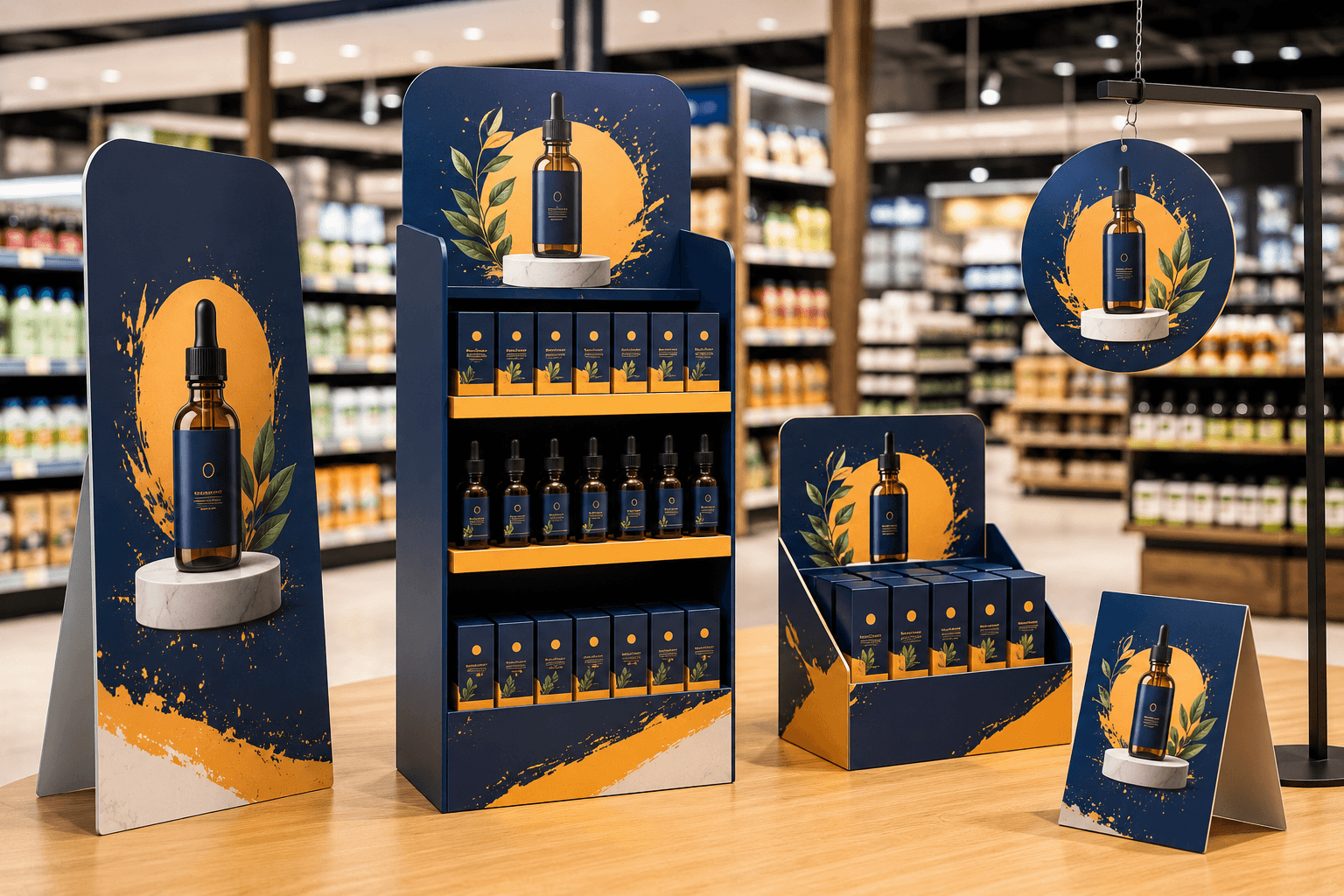
Why POSM Quality Makes or Breaks a Retail Campaign
Point-of-sale materials are often the last thing a shopper sees before deciding to buy. Here's why POSM production quality deserves the same attention as the campaign creative itself.
A retail campaign can have strong creative, a solid media plan, and a compelling offer - and still underperform in-store if the point-of-sale materials don't hold up. POSM is the final touchpoint between a brand and a shopper, and it's often judged in seconds.
A few production factors that affect how POSM performs on the shop floor:
Structural durability. Standees, shelf talkers, and danglers get handled, bumped, and left in place for weeks at a time. Materials and construction need to survive real retail conditions, not just look good in a proof.
Color accuracy against brand guidelines. In-store materials sit next to packaging and other brand touchpoints - any color drift is immediately noticeable and undermines brand consistency.
Fast, reliable turnaround for campaign windows. POSM is almost always tied to a launch date or promotional window. Production delays don't just cost time - they cost the campaign's relevance.
Volume consistency across locations. A national or regional rollout means dozens or hundreds of identical units. Consistency at scale is a production discipline, not a given.
POSM and retail display production is one of our core service categories, built specifically around the deadlines and consistency that retail and promotional campaigns require.